


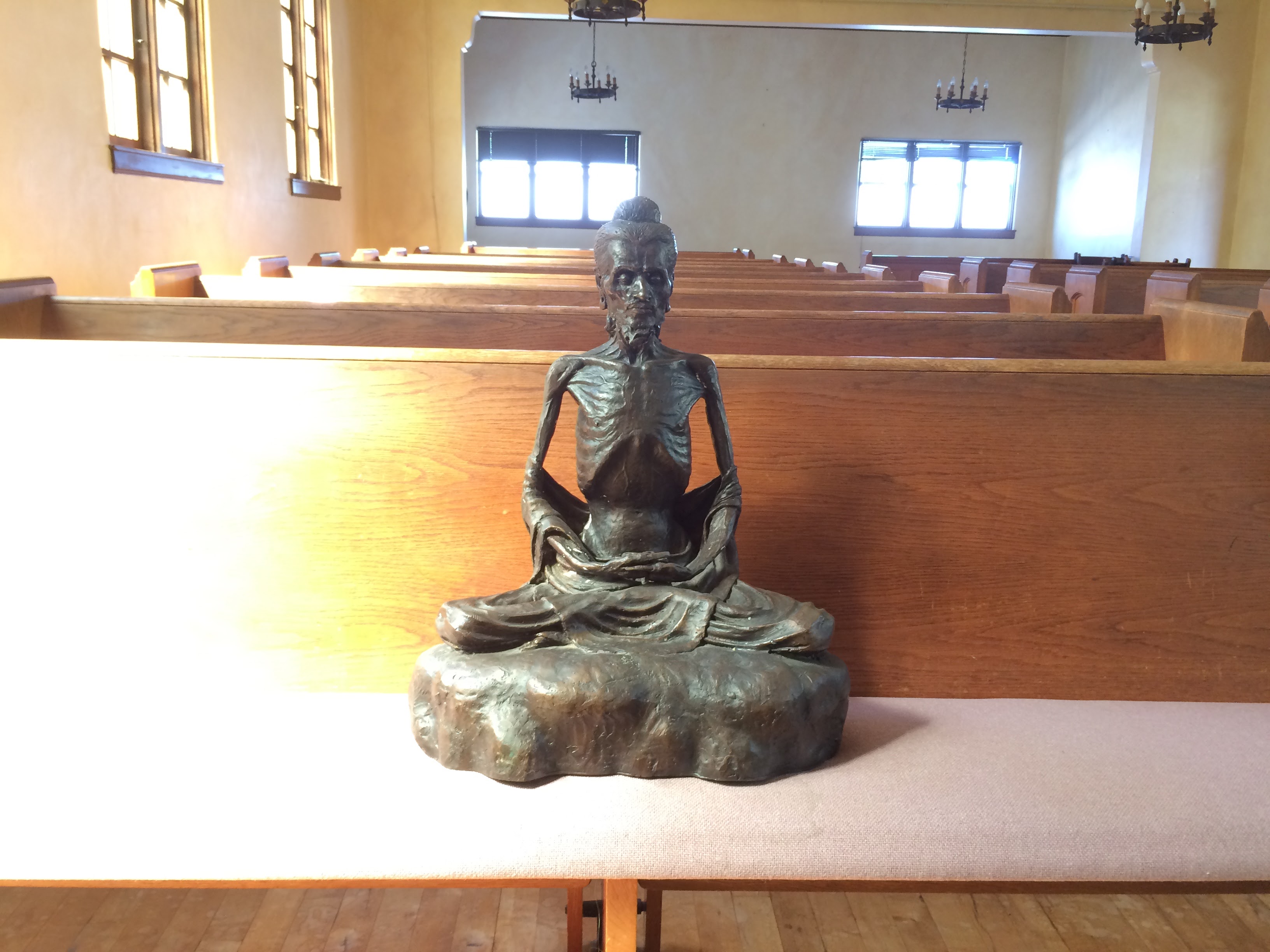
One of the most powerful images in Buddhist art is that of the Emaciated Buddha. His body is thin to the point of fragility, ribs visible, skin stretched tight over bone. It is not an image meant to inspire awe through perfection, but honesty through truth. This image captures a critical moment in the Buddha’s journey—and offers a teaching that remains deeply relevant today.
Before he became the Buddha, Siddhartha Gautama left behind a life of comfort and privilege in search of an end to suffering. Like many sincere seekers, he believed that freedom could be found through extreme discipline. He practiced severe asceticism for years, limiting food, sleep, and comfort, pushing his body to its breaking point in the hope that enlightenment lay on the other side of denial.
Instead, he discovered something humbling: the body cannot be abused into awakening. Starvation weakened his body and clouded his mind. The practices meant to bring liberation only deepened his suffering.
At his lowest point, Siddhartha accepted a simple offering of nourishment—milk and rice—from a village woman named Sujata. This moment is often misunderstood as giving up. In truth, it was an act of deep wisdom and self-compassion. By nourishing his body, Siddhartha made space for clarity. He let go of the belief that suffering itself was the path.
This realization became the foundation of the Middle Way—a path that avoids both indulgence and self-punishment. Strengthened and grounded, Siddhartha sat beneath the Bodhi tree, where he awakened to the nature of suffering and its end, not through extremes, but through balance, presence, and insight.
When Dharma Bum Temple opened its doors, we intentionally chose the statue of the Emaciated Buddha as a reflection of who we are as a community and where we are in our practice. We are not a community that claims perfection or arrival. Like Siddhartha in this moment, we are still learning. We struggle. We doubt. We sometimes push too hard or lose our balance. And we keep showing up.
The Emaciated Buddha reminds us that the path is not about having it all figured out. It is about honesty, perseverance, and compassion—for ourselves and for one another. This image stands in our temple not as a symbol of suffering, but as encouragement. A reminder that even the Buddha struggled. And that struggle itself can be part of the path.
At Dharma Bum Temple, this statue motivates us to continue practicing, especially when the path feels difficult. It invites us to meet ourselves exactly where we are, to care for our bodies and minds, and to trust that awakening unfolds not through force, but through balance, community, and sustained practice.
In a culture that often celebrates burnout, overwork, and self-sacrifice, the Emaciated Buddha stands as a quiet but radical teaching: awakening does not come from breaking ourselves open. It comes from learning how to live with awareness, kindness, and balance—moment by moment, together.
Reflection Question:
Where in your life might you be pushing too hard—or not caring enough for yourself—and what would it look like to practice the Middle Way with compassion right where you are?